
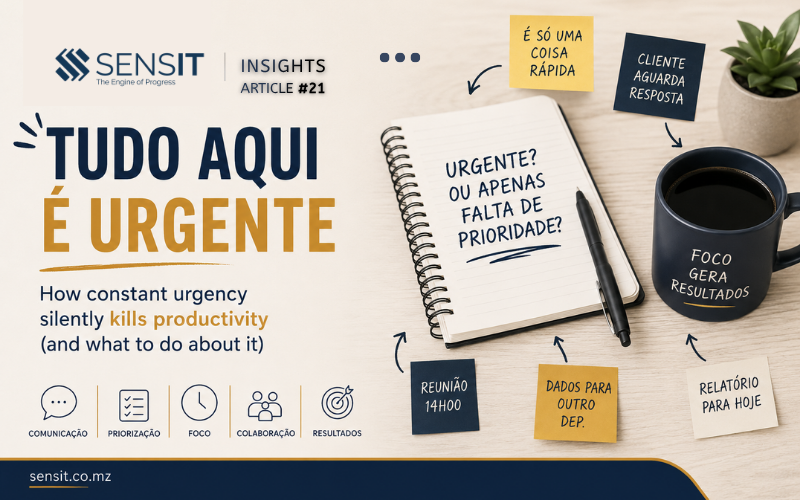
Recently, during a conversation with an employee from one of our client organizations, they made a comment that stuck with us: “Tudo aquié urgente”
It wasn’t said out of frustration with management nor was it a criticism of their colleagues, it was simply the reality they experienced every day.
And the truth is, many professionals across Mozambique can probably relate to this feeling. A message comes through WhatsApp asking for something “urgente”, a colleague walks by and says “É só uma coisa rápida”, a client needs feedback before the end of the day, another department is waiting for information before they can continue their work.
Each department has pressing deadlines, each person genuinely believes their request should come first, and everyone is trying to move work forward, often without realizing that the person on the receiving end might be just as overwhelmed. This is a challenge many organizations face every single day.
When urgency becomes the norm
Not every urgent request is unnecessary, businesses will always encounter situations that require immediate action but the problem begins when urgency becomes the default language of the organization.
When every email is marked “ASAP”, every message requires an immediate response, and every task is treated as the highest priority employees are forced to constantly switch between responsibilities. Instead of becoming more productive, they become more reactive.
They spend the day responding to what is happening around them instead of creating space to plan, improve, and solve problems before they become emergencies.
Research by the American Psychological Association has shown that frequent task switching reduces productivity and increases the likelihood of errors. Similarly, the Project Management Institute (PMI) has consistently found that poor prioritization and ineffective communication are among the leading causes of project delays and budget overruns.
The hidden profit killer
A culture of constant urgency doesn’t just create stress it also reduces performance because teams are spending more time responding than planning.
Important work is interrupted before it’s completed, deadlines start colliding, mistakes increase, and employees struggle to distinguish between what is truly critical and what simply feels urgent.
To put this in prespective for a business with just 20 employees for example assuming an average employment cost of 35,000mzn per employee per month, losing one day of productive work per employee each week can represent over 150,000mzn worth of productive capacity lost every month. While the exact figure varies by business, the message is clear: operational inefficiencies have a big measurable financial cost.
This brings us now to the billion dollar question: “How do we solve this issue?”
The role of communication
One of the most effective ways to reduce unnecessary urgency is through strongercommunication between departments. Many workplace frustrations do not happen because people do not want to cooperate, they happen because people do not always have visibility into what others are managing.
Before escalating a request, teams should understand each other’s workloads, timelines, and priorities. A conversation as simple as: “When would realistically be the best time for you to complete this?” can often achieve more than another message labelled “urgent.”
Research from Gallup supports this approach, stating that organizations with strong communication and high employee engagement, experience fewer workplace conflicts, get higher productivity, and better customer outcomes. When departments learn how to communicate openly, they create visibility, build trust, and coordinate priorities instead of competing for attention.
You might be thinking “So, is it wrong to have urgency at work?”, and the answer is not at all. Urgency is in fact necessary, the problem is not urgency itself but when everything receives the same level of urgency. Healthy organizations reserve it for situations that truly require immediate action like a key client reporting a critical issue that is preventing them from using your product or a major supplier failure that threatens business continuity. Situations where actually delaying the response would create significant operational, financial, legal, or safety consequences.
Building a healthier work environment does not mean eliminating urgency, it means creating the conditions where urgency is used wisely.
Practical Steps to Reduce “Everything is Urgent”
Building a healthier work environment does not mean eliminating urgency, it means creating the conditions where urgency is used wisely. Here are five practical changes leaders can implement:
1. Create Clear Priority Levels
Instead of treating every request the same, define simple priority categories across the organization.
- Critical: Immediate action required because business operations, clients, compliance, or safety are at risk.
- High: Important work that should be completed today or within the agreed deadline.
- Normal: Planned work that follows the team’s regular workflow.
When everyone uses the same language, employees spend less time guessing what should come first.
2. Protect Focus Time
Not every task requires an immediate response. Encourage employees to block periods of uninterrupted work where they are not expected to respond instantly to messages unless a genuine emergency arises, this way important work can be completed faster and with fewer mistakes.
3. Make Planning a Daily Habit
A simple 10-15 minute team planning session at the beginning of the day can dramatically reduce unnecessary interruptions. Ask questions like: “What are today’s top priorities? Is anyone waiting on another department or has blockers? Are there any genuine risks that require immediate attention?” Small conversations had early, often prevent large emergencies later.
4. Agree on Communication Rules
Every organization should establish clear expectations around communication, for example: when should WhatsApp be used instead of email, what actually qualifies as “urgent”, what response times are reasonable for different types of requests?
When expectations are clear, people interrupt each other less and collaboration becomes smoother.
5. Measure the Root Cause
If everything feels urgent every week urgency is probably not the real problem maybe you should ask:
Why are these last-minute requests happening?
Solving the root cause creates lasting improvement instead of constantly reacting to symptoms.
By improving planning, clarifying priorities, and strengthening communication across departments businesses create an environment where employees spend less time firefighting and more time delivering meaningful results.
What About Your Organization?
If someone walked through your office today and asked your team, “What’s the most overused word here?”, would the answer be “urgent”?
If all this sounds familiar, SENSIT invites you to start a conversation.
Book a complimentary quick sync with our team, and let’s explore the operational challenges affecting your organization and identify opportunities to improve productivity, communication, and execution.


